

If you’ve ever dreamed of starting an activewear brand, you’ve probably asked yourself one question: Can I make something like Lululemon?
The short answer is yes—and no. Let’s break down where Lululemon is actually manufactured, what makes their supply chain unique, and why the real barrier for startups isn’t the sewing—it’s the fabric.
Lululemon’s Manufacturing Footprint: The Numbers
Despite what you might see on TikTok, Lululemon does not manufacture the majority of its products in China. According to the company’s own disclosures, only about 3% of its finished goods are made in Mainland China.
Instead, Lululemon’s production is spread across Southeast Asia, with clear sourcing hubs:
| Country | Share of Manufacturing (by cost) |
|---|---|
| Vietnam | ~40% |
| Cambodia | ~18% |
| Sri Lanka | ~11% |
| Indonesia | ~11% |
| Bangladesh | ~7% |
This data reflects Lululemon’s shift away from China over the past several years, a move driven by both cost and geopolitical considerations. Interestingly, while manufacturing has moved out of China, fabric sourcing increasingly comes from mainland China, which now supplies about 29% of their materials—up from 18% in 2020.
The Real Secret: Custom Fabrics, Not Complex Sewing
Here’s the part that matters for your startup.
The sewing and construction of Lululemon-style activewear are not the main challenge. Most factories in Vietnam, China, and elsewhere can handle the pattern-making and assembly without much difficulty.
The bottleneck is the fabric.
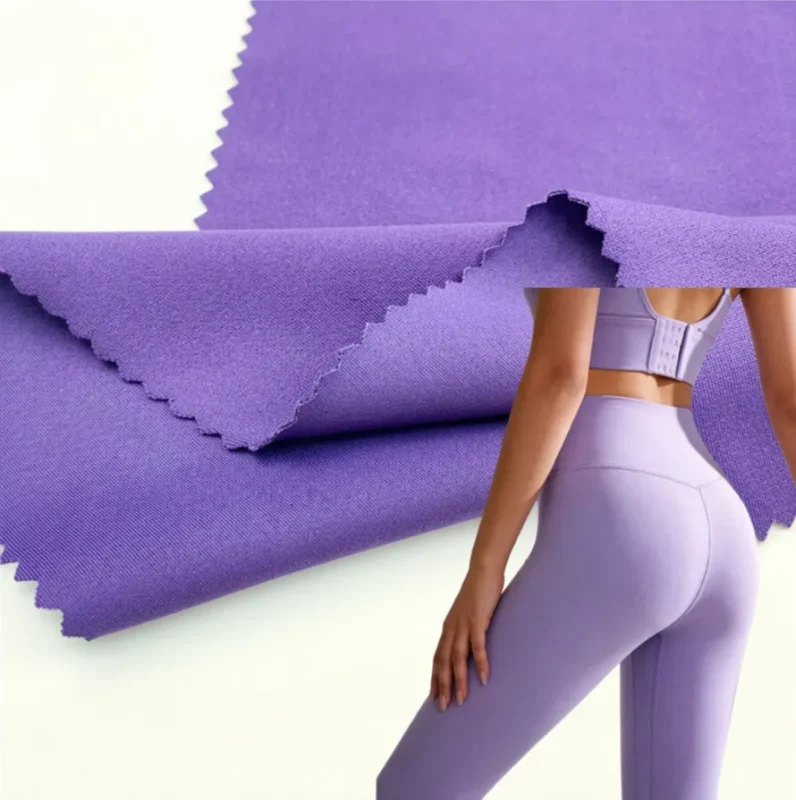
Lululemon uses proprietary fabrics engineered for a specific “Science of Feel.” These materials are developed through long-term partnerships with specialized mills. The company invests heavily in material innovation—recently signing a 10-year deal with Samsara Eco to source recycled nylon, which could cover up to 20% of its fiber needs. They also push suppliers to meet strict sustainability targets, including eliminating coal-fired boilers by 2030.
For a startup, the problem is MOQ (Minimum Order Quantity).
Custom fabrics require mills to run dedicated production lines. The MOQs for these high-performance textiles are often 500 kg per color or more. In garment terms, that translates to thousands of units before you’ve even cut a single piece of fabric.
By contrast, Lululemon’s own private label MOQs for apparel are around 500 pieces per style—already a significant commitment for a new brand.
What This Means for You
| Challenge | Lululemon’s Solution | What Startups Can Do |
|---|---|---|
| Custom Fabric | Proprietary blends, huge MOQs, long-term mill contracts | Use premium off-the-shelf performance fabrics |
| Manufacturing Scale | Massive production runs across 40+ factories | Work with small-batch factories (MOQs as low as 50–100 units) |
| Sustainability | Multi-year offtake agreements, in-house material innovation | Choose certified fabrics (e.g., recycled nylon, Oeko-Tex) from existing supplier catalogs |
Bottom Line
Lululemon isn’t hard to copy because of how they sew—it’s hard to copy because of what they sew. The fabric is the moat.
For a startup, the smarter path isn’t trying to replicate their supply chain. It’s finding suppliers who offer high-quality, performance-driven fabrics that are already in production—without the custom MOQ hurdle.
Focus on fit, design, and brand storytelling. Leave the custom nylon blends to the billion-dollar brands.