



When people search “Where is Shein located?”, they’re often seeking more than just a physical address—they want to understand the origins and evolution of one of the world’s most talked-about fashion brands. While Shein has become a household name in global e-commerce, its journey is far richer and more dynamic than many realize.
From Humble Beginnings to Global Phenomenon
Founded in 2012 in China, Shein began as a modest online retailer offering trendy, affordable clothing. What set it apart from the start was its lightning-fast supply chain, data-driven design process, and savvy use of social media marketing—especially on platforms like TikTok and Instagram. These strategies fueled explosive international growth, turning Shein into a dominant force in fast fashion.
Over time, the brand has significantly broadened its scope. Beyond women’s apparel, Shein now offers men’s and kids’ clothing, beauty products, home décor, and even tech accessories. It has also launched high-profile collaborations with designers and celebrities, signaling its ambition to move beyond disposable fashion and into lifestyle branding.
So, Where Is Shein Actually Located?
Shein’s global headquarters is officially based in Nanjing, Jiangsu Province, China—the city where the company was first conceptualized and developed.
However, the engine behind Shein’s rapid production lies farther south, in the Pearl River Delta region (encompassing Guangzhou, Shenzhen, and surrounding cities). This area is one of the world’s largest manufacturing ecosystems, home to thousands of agile garment factories and textile suppliers. Shein’s deep integration with this network allows it to design, produce, and ship new styles in as little as 7 days—a speed that traditional retailers can’t match.
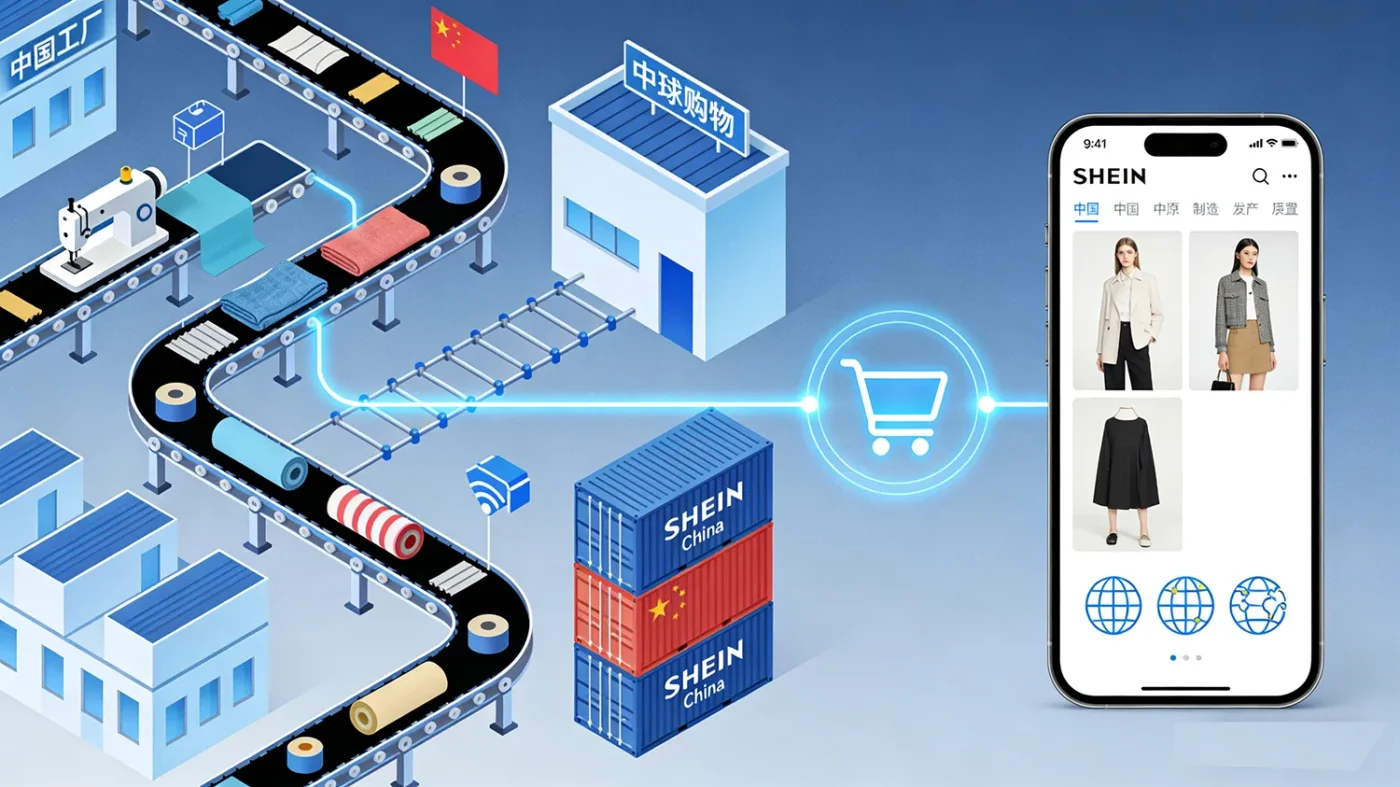
While rooted in China, Shein operates globally. It maintains regional offices and logistics hubs in key markets including the United States, Mexico, Brazil, Germany, France, Spain, Italy, the UAE, and Singapore, supporting localized customer service, warehousing, and compliance efforts.
Beyond Fast Fashion: Shein’s Platform Transformation
In recent years, Shein has embarked on a strategic pivot—from being a vertically integrated fast-fashion brand to becoming an open digital marketplace.
Through initiatives like the Shein Marketplace, the company now invites independent designers, small brands, and third-party sellers from around the world to list and sell their products directly on its platform. This shift not only diversifies Shein’s catalog but also empowers creators with access to its massive global audience of over 150 million active users.
This transformation reflects a broader trend in e-commerce: moving from inventory-led retail to ecosystem-driven platforms. By doing so, Shein aims to stay ahead of shifting consumer expectations—offering not just affordability and speed, but also uniqueness, inclusivity, and sustainability (a growing focus through programs like Shein Exchange, its resale initiative).
In Summary
Shein may have started in Nanjing, but today it exists everywhere its customers are—online, on mobile, and increasingly, in the global conversation about the future of fashion. Its location isn’t just a point on a map; it’s a distributed network of innovation, manufacturing, and digital commerce spanning continents.